Natural Red African Palm Oil

Red palm oil.
As it should taste.

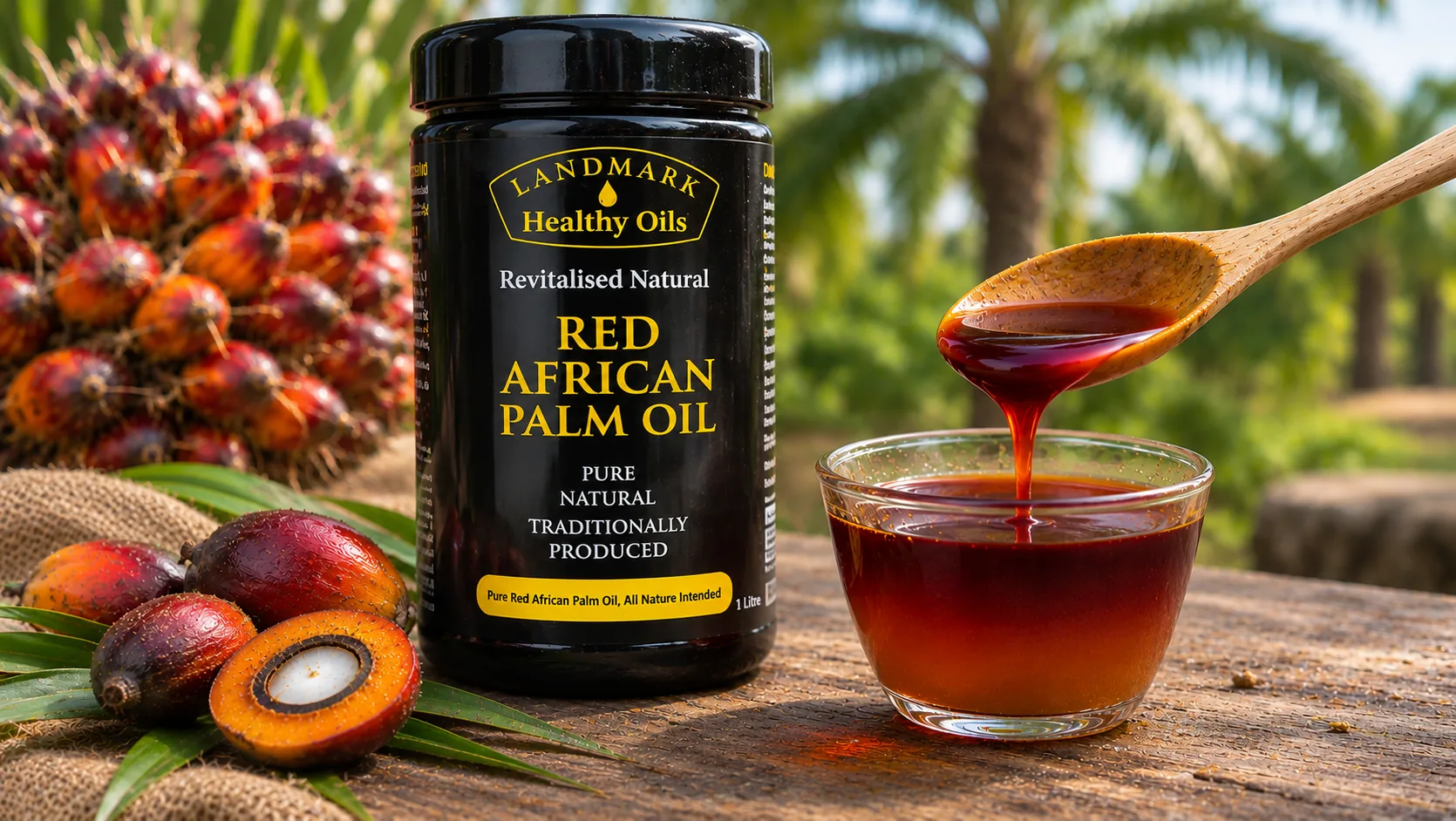
A richly flavoured natural red African palm oil, selected for quality and taste, presented in 1 litre Miron® violet glass and GRANDER revitalised.

“The best palm oil I have ever tasted.”
Femi, Edgware, London

1 litre | Miron® violet glass | Natural red palm fruit oil

This isn’t the palm oil you think you know.

For many people in Britain, “palm oil” means an anonymous ingredient hidden in biscuits, spreads and processed foods.

But that is only one part of the story.

Natural red palm oil is the traditional oil of the fruit of the African oil palm, Elaeis guineensis. Its red-orange colour, distinctive flavour and long culinary history existed thousands of years before modern industrial refining.

Palm oil did not begin in a factory.

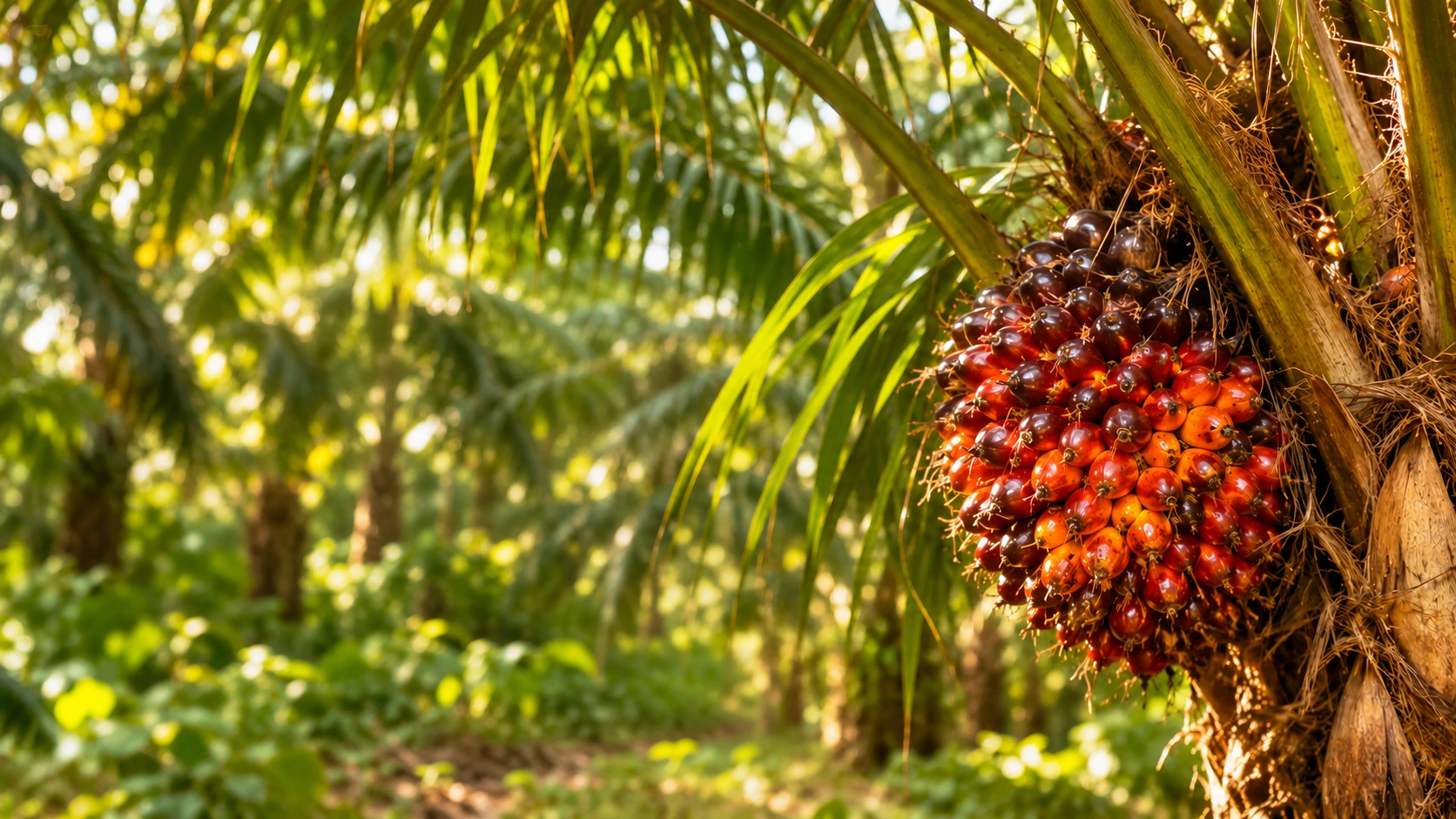
Ripe oil-palm fruit bunch on an African oil palm A woman in a printed wrap beside a ripe oil-palm fruit bunch

Palm oil began in Africa.

The African oil palm, Elaeis guineensis, is indigenous to tropical Africa.

Archaeological evidence shows a relationship between people and oil palm in West Africa stretching back thousands of years, with evidence for oil-palm use at least around 5,000 years ago.

For generations, its naturally red oil became part of food, family life, household use, trade and culture.

5,000+ years of human use

Material recovered from an ancient tomb at Abydos in Egypt, dating to around 3000 BC, has also been judged probably to be palm oil, although the exact botanical identification should not be overstated.

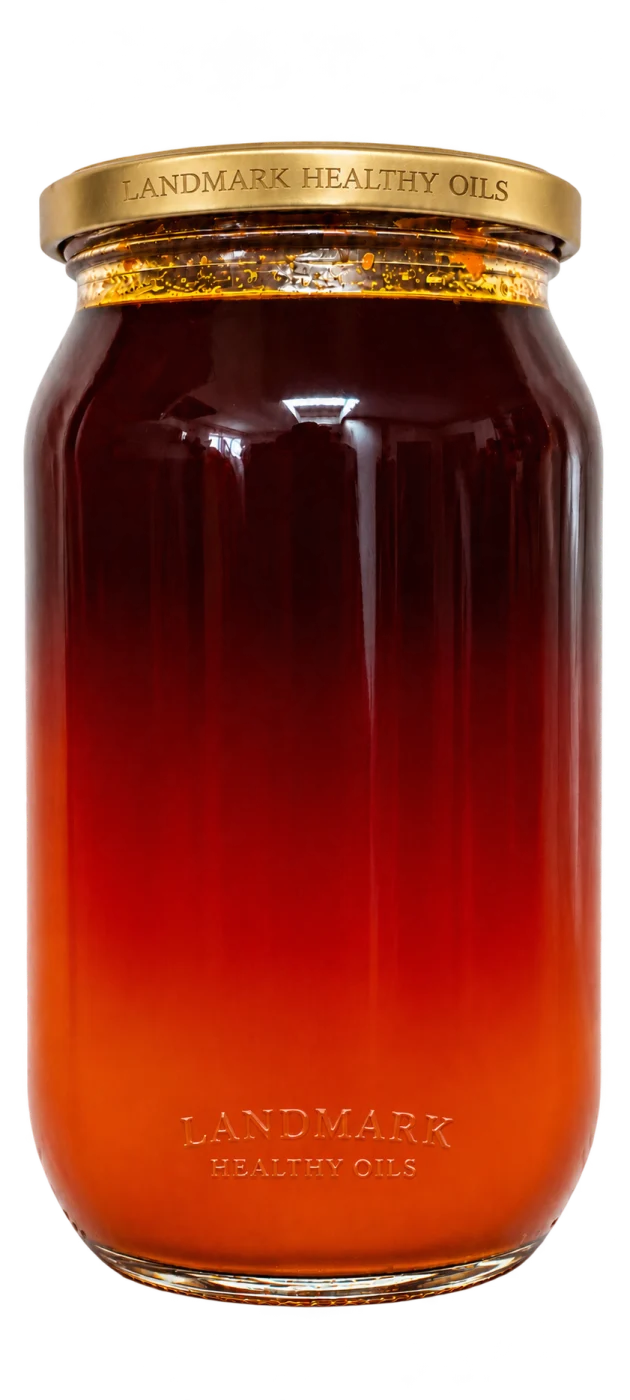
Natural Red African Palm Oil in a clear glass jar, deep burgundy at the top fading to red-orange at the base

Look at the colour.

That extraordinary burgundy, red and orange colour is not something we need to manufacture.

Natural red palm oil is known in the scientific literature for naturally occurring carotenoid pigments, including alpha- and beta-carotene.

These are among the natural components that can be dramatically reduced during intensive refining, bleaching and deodorisation.

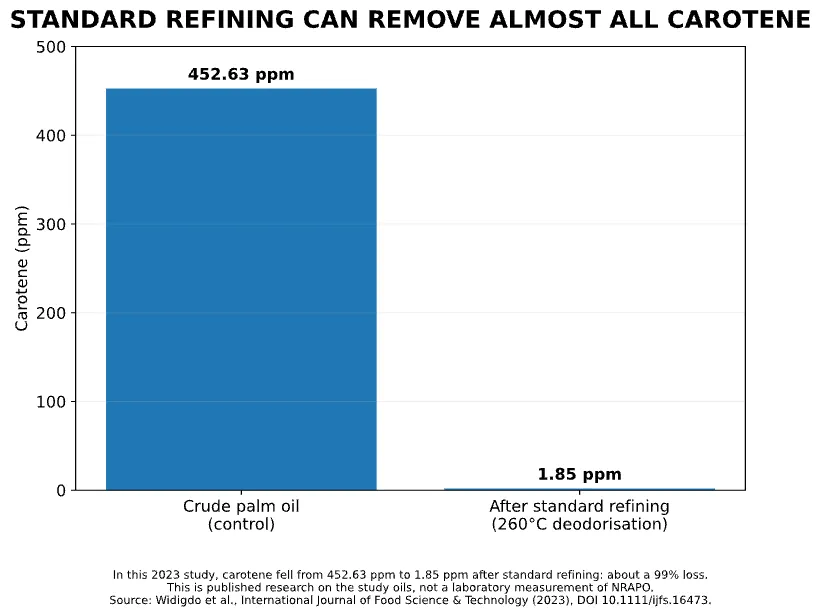
From 452.63 ppm to 1.85 ppm

In a published 2023 study, carotene fell from 452.63 ppm in the crude palm oil control to 1.85 ppm after the reported standard refining process incorporating deodorisation at 260°C.

That is a reduction of approximately 99%.

Bar chart: carotene fell from 452.63 ppm in crude palm oil to 1.85 ppm after standard refining with 260°C deodorisation (Widigdo et al., 2023)

These are published study results, not measurements of Landmark NRAPO. Until our own laboratory analysis is complete, we do not make product-specific claims about the carotenoid concentration of this oil.

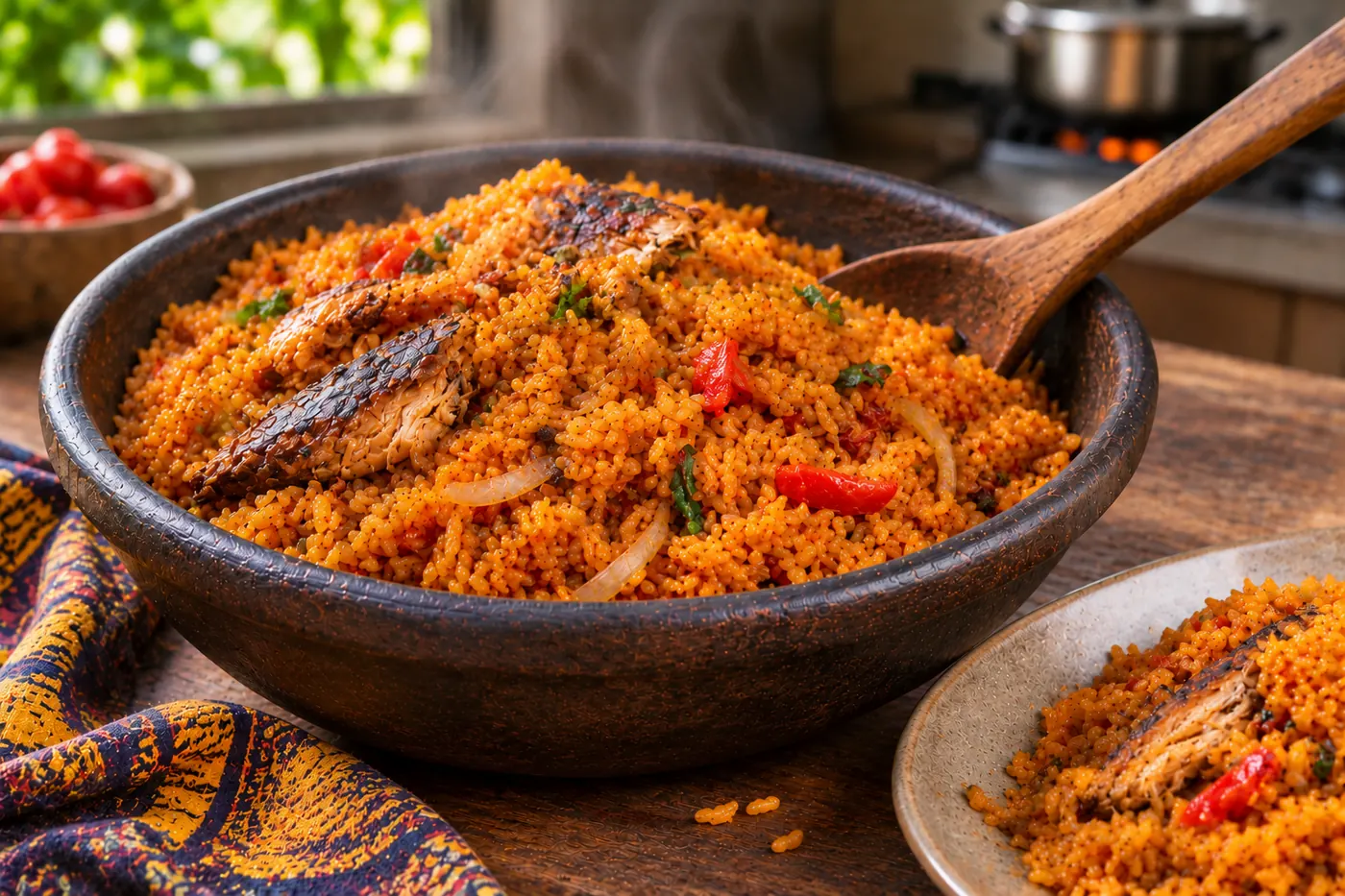
Nigerian native palm-oil rice with smoked fish in a dark bowl

Then taste the difference.

Colour may catch your eye.
Taste is what brings people back.

“The best palm oil I have ever tasted.”
Femi, Edgware, London

That is exactly the kind of reaction we want from an oil chosen first and foremost for its quality and taste.

Try it for yourself

Made for food.

Natural red palm oil belongs in the kitchen.

Its colour, aroma and characteristic flavour are part of some of West and Central Africa’s best-known food traditions, but its possibilities do not stop there.

Nigerian native palm-oil rice with smoked fish, red pepper and onion
01

Nigerian native palm-oil rice

Distinct grains of rice cooked with red palm oil, smoked fish, crayfish, onion and red pepper, with traditional seasoning such as iru where appropriate and a restrained touch of scent leaf.

Here NRAPO becomes part of the character of the dish itself, contributing colour, aroma and flavour rather than simply acting as a neutral cooking medium.

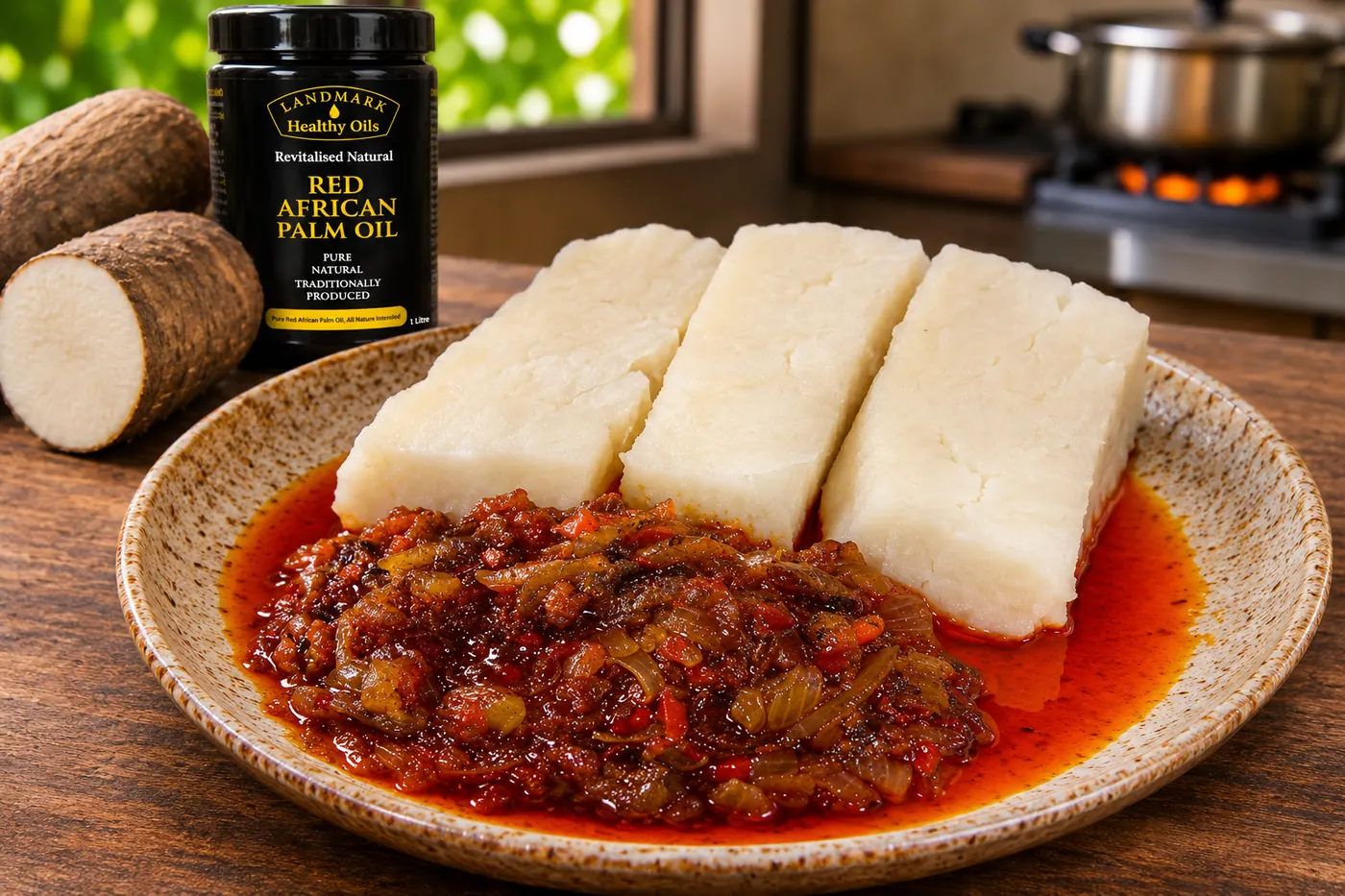
Boiled white yam with a red palm-oil pepper and onion preparation
02

Boiled yam with palm-oil pepper & onion

Traditional boiled white yam with a dense, starchy texture, served with a deep red palm-oil-led pepper and onion preparation. The oil pools naturally around the sauce and stains the surface of the yam as it is eaten.

It is a simple way to experience the flavour and character of natural red palm oil without hiding it behind a complicated recipe.

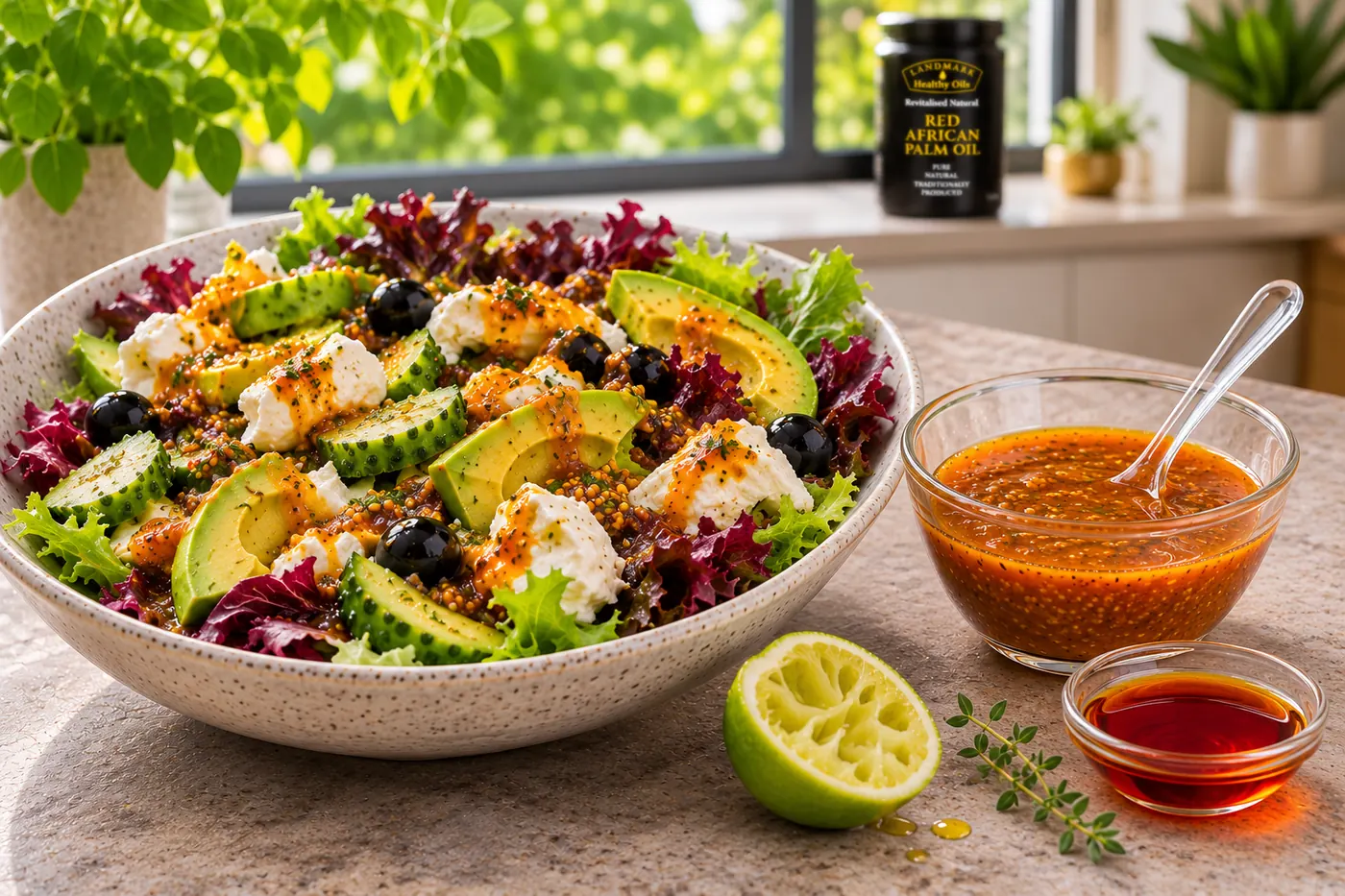
Avocado, mozzarella and leaf salad with NRAPO vinaigrette
03

Avocado, mozzarella & leaf salad with NRAPO vinaigrette

A contemporary salad of green and red leaves, avocado, torn mozzarella, cucumber and black olives.

The NRAPO vinaigrette combines olive oil, natural red palm oil, apple cider vinegar, lime, wholegrain mustard, honey, salt, tomato purée and mixed herbs.

It shows that natural red palm oil does not have to stay within traditional African cooking. Its distinctive colour and flavour can work in a completely different style of food.

A little red oil can completely change the character of a dish.

Far more than a cooking oil.

Across different African communities, palm oil became woven into everyday life in ways most modern consumers have never heard about.

Household light

Palm oil was historically burned in household lamps and other forms of lighting.

Traditional soap

Palm oil has a long history as a raw material in traditional soap making.

Wood & materials

Historical uses included protecting or treating wood and other materials.

Skin & hair traditions

Palm oil also formed part of traditional skin, hair and body-care practices in different communities.

Newborn & family traditions

In some communities, including documented Ijebu traditions, palm oil appeared in practices surrounding newborns and early family life.

Marriage & ceremony

Palm oil could have a place in marriage, family, ceremonial and cultural traditions.

Markets & livelihoods

Production and trade in palm oil supported local markets and livelihoods, including important economic roles for women.

Trade & commerce

Long before today’s global palm-oil industry, palm oil was already an important regional commodity.

Industrial lubrication

West African palm oil later became valuable in nineteenth-century industrial Europe, including as a lubricant for machinery.

Traditional cooking

For generations, its most familiar role remained the kitchen: cooking, frying, seasoning and adding colour and flavour.

Soups & stews

Palm oil became fundamental to numerous soups, stews and sauces across West and Central Africa.

Distinctive food traditions

Palm-nut soup, Banga, yellow gari, Ikokore and many other dishes demonstrate just how varied those culinary traditions became.

One oil: food, light, family, craft, commerce and culture across generations.

Historical and cultural practices are presented for educational purposes. Their inclusion is not a medical recommendation or a claim of therapeutic efficacy.

Not all red palm oil is the same.

The colour may be extraordinary, but colour alone does not determine quality.

The finished oil can be influenced by what happens long before it reaches the jar.

  • Fruit

    The condition and quality of the fruit matter.

  • Processing

    How the fruit is handled and processed can affect the finished oil.

  • Storage

    Time, temperature, light, oxygen and storage conditions all matter.

  • Taste

    Ultimately, we believe an oil intended for food should also earn its place through taste.

Our aim is straightforward:

To offer an exceptional natural red African palm oil that we are proud to put into glass and proud to put on the table.

What can the palm-oil water test tell you?

You may have seen the popular demonstration where a little palm oil is placed into clear water.

The idea is not completely meaningless.

If visible colour or other water-soluble material migrates from the oil into the water, that can provide a warning sign that something water-soluble has been added to the oil.

Our Natural Red African Palm Oil leaves the water clear in this popular demonstration.

But that does not make the water test a complete test of purity.

The test can tell us something. It cannot tell us everything.

Some potential adulterants are not water-soluble and will not reveal themselves through a simple water demonstration.

Proper laboratory analysis is required when you want to identify specific adulterants or establish composition conclusively.

So we are happy to show you the water test.
We just won’t pretend it proves more than it does.

GRANDER revitalised

Already exceptional. Then GRANDER.

Exceptional oil first. GRANDER revitalisation next.

We start with the oil itself. Its natural colour, aroma, texture and taste have to be right first. Then we GRANDER revitalise it.

Across food and drink applications, one of the qualities people repeatedly describe following GRANDER treatment is a smoother, more rounded sensory character, with the underlying flavour, texture and subtle detail seeming to come through with greater clarity.

That is exactly why we use it here.

We are not using GRANDER to rescue an ordinary oil.

We start with an exceptional natural red African palm oil and use GRANDER because we want to bring out the smoothness, richness and subtle detail that are already there.

GRANDER also has a long history of use in applications where maintaining quality and preservation are important, giving us another reason to make revitalisation part of the way we prepare Landmark NRAPO.
From the oil to the jar.

When we decided to present Landmark NRAPO as a premium food, the container became part of the decision.

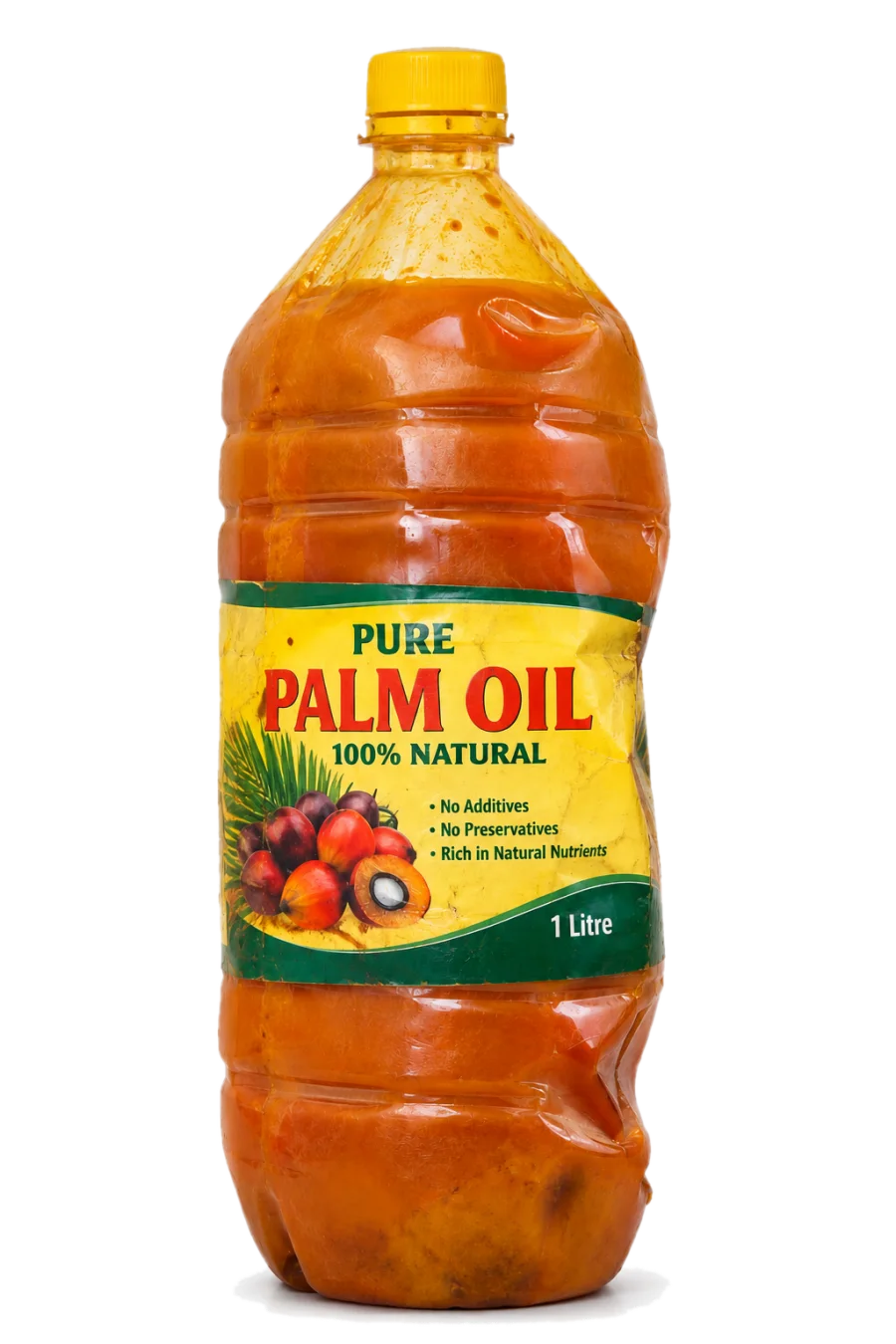
Red palm oil in a familiar plastic bottle Natural red palm oil in clear glass, revealing its colour and consistency Landmark Natural Red African Palm Oil, 1 litre, in Miron violet glass

The familiar way

Red palm oil is commonly encountered in straightforward plastic packaging.

That tells us nothing by itself about whether the oil inside is good or bad.

But we wanted a different final presentation for Landmark NRAPO.

First, let the oil speak.

Clear glass reveals something that ordinary presentation can easily hide: the remarkable natural colour, density and consistency of the oil itself.

That is what our clear-glass image is there to show.

Then protect it.

Once we had revealed the oil, the next question was how we wanted to package the finished product.

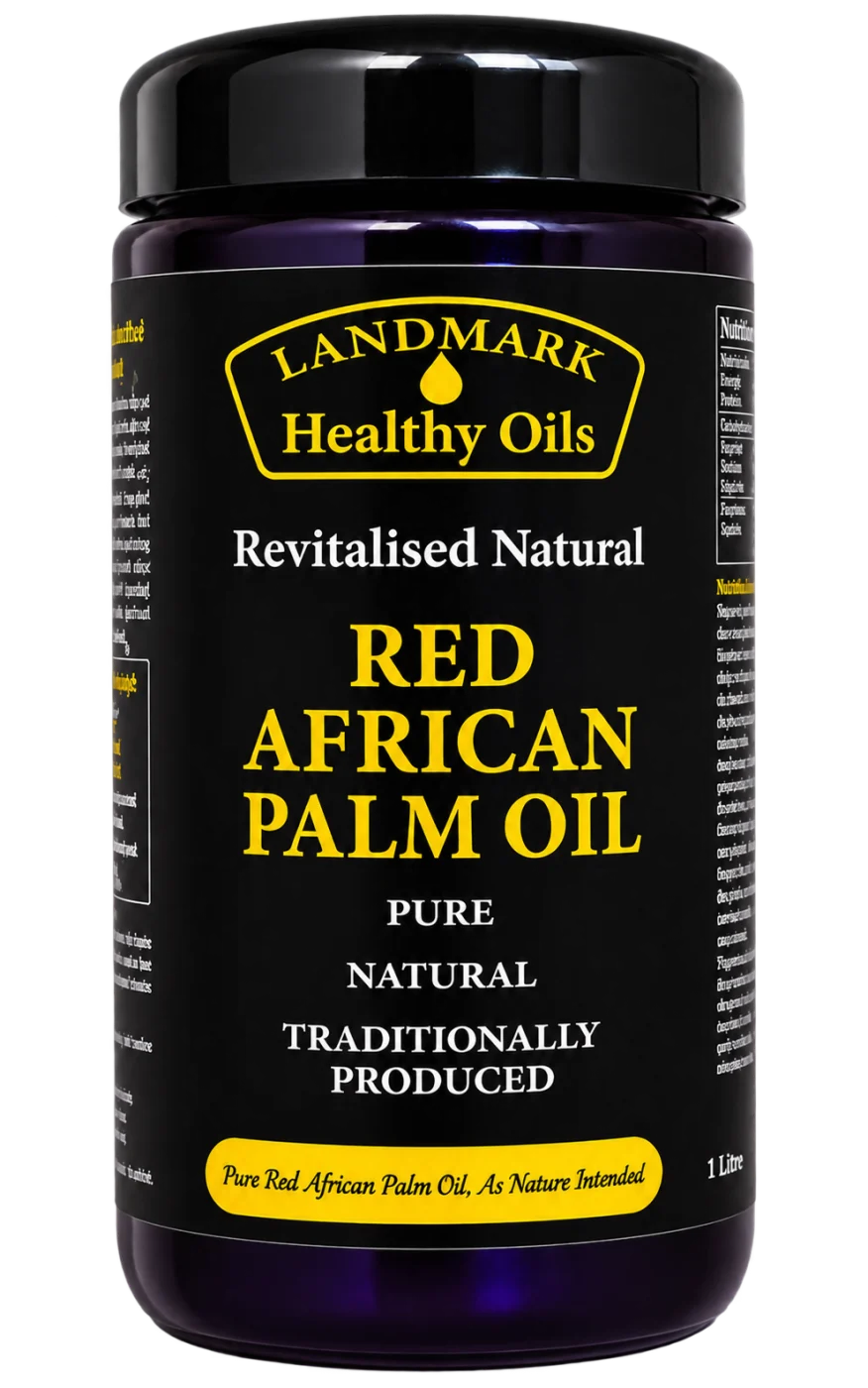
Our answer was Miron® violet glass.

Familiar presentation. Reveal the oil. Protect what makes it special.

Landmark Natural Red African Palm Oil in a 1 litre Miron violet glass jar

Why Miron® violet glass?

The jar is not simply there to look beautiful, although it does.

Palm oil is a lipid-rich food, and storage conditions matter to oils.

Light, oxygen, temperature and time can all influence what happens during storage.

We therefore wanted the finished Landmark product in glass, with a high level of protection from visible light.

Miron® violet glass provides that combination.

According to Miron, its violet glass blocks the complete visible-light spectrum while selectively allowing specific UV-A/violet and infrared wavelengths to pass.

Miron also identifies oils among the products particularly suited to its glass.

For us, the decision brings together two important characteristics:

Light protection

A highly light-protective environment around an oil whose natural colour, aroma and other characteristics matter to us.

Glass contact

A glass surface in contact with the oil rather than conventional plastic packaging.

The light protection characteristics of an opaque container. The oil-contact surface of glass.

That is why Miron is part of the finished Landmark NRAPO product.

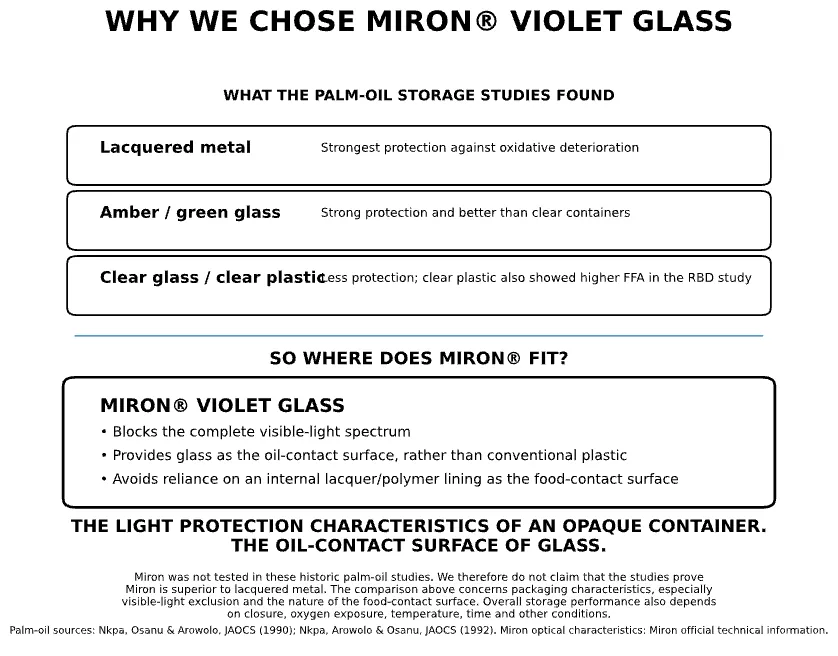
Evidence graphic: what historic palm-oil storage studies found for lacquered metal, amber/green glass and clear containers, and where Miron violet glass fits

Evidence note

Historical palm-oil packaging studies found better oxidative protection in lacquered metal and amber or green glass than in clear containers under the conditions studied.

Those studies did not test Miron® violet glass.

We therefore do not claim that those studies prove Miron is superior to lacquered metal or establish a specific shelf-life extension for Landmark NRAPO.

The comparison helps explain the packaging characteristics we value, particularly visible-light protection and the nature of the food-contact surface.

The science is more interesting than the headlines.

Natural red palm oil is an interesting food scientifically.

That does not mean we need to turn it into a miracle food.

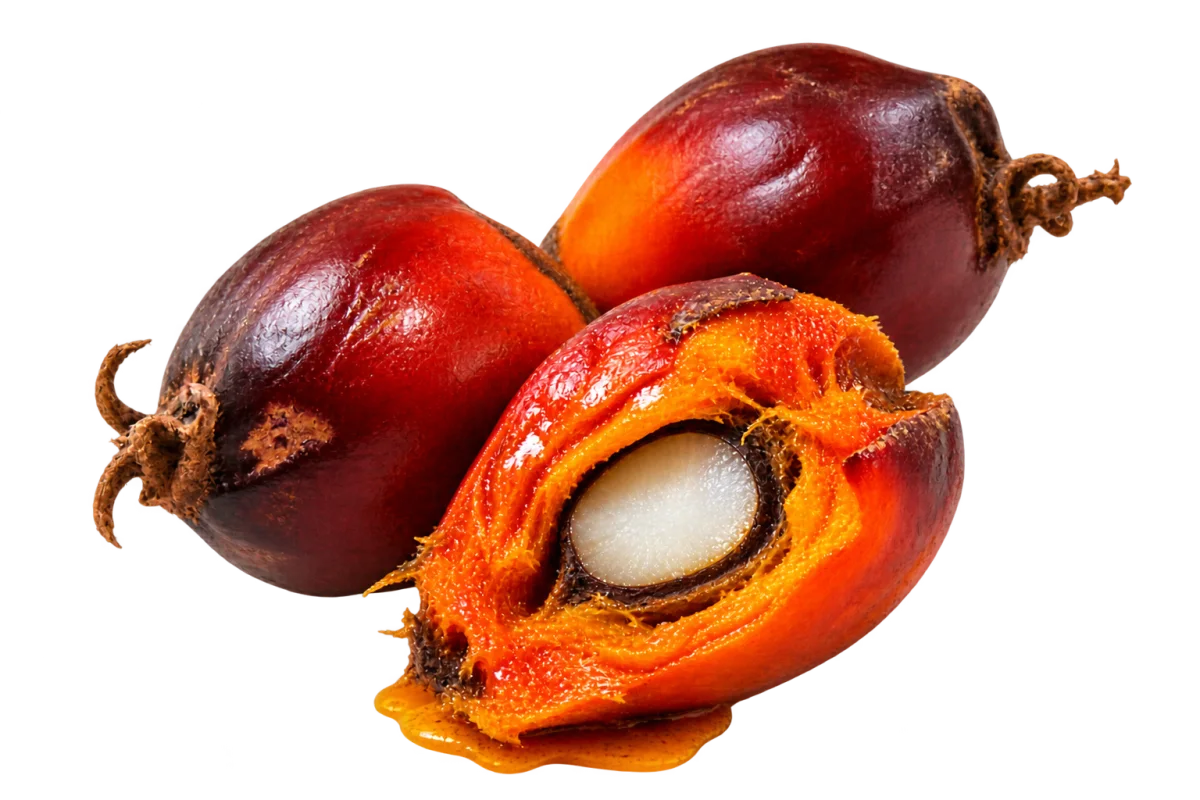
Whole and cut oil-palm fruit showing the orange-red mesocarp around the pale kernel

From fruit to oil

Palm oil comes from the fleshy outer part, or mesocarp, of the oil-palm fruit.

That naturally orange-red flesh is the physical origin of the red palm oil you see in the jar.

Natural carotenoids

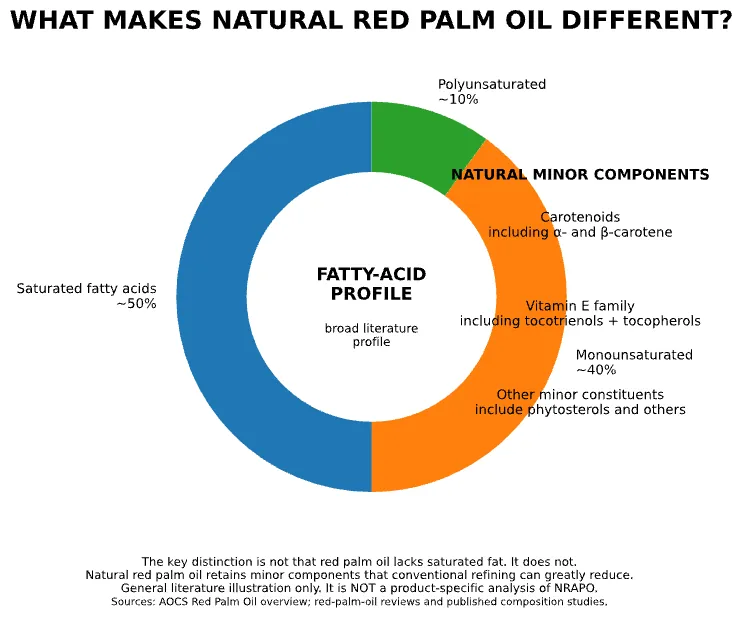
Natural red palm oil is recognised in the scientific literature as a rich dietary source of carotenoids, including alpha- and beta-carotene.

Human trials have investigated red palm oil as a food source of provitamin A, and randomised-trial evidence has reported improvements in vitamin A status.

That does not mean we assume a particular carotenoid concentration in Landmark NRAPO.

Our own product-specific laboratory analysis is still to be completed.

Tocotrienols

Palm oil is also an important dietary source of members of the vitamin E family, including tocotrienols and tocopherols.

Tocotrienols have attracted substantial scientific interest.

However, studies using concentrated tocotrienol or tocotrienol-rich-fraction supplements cannot simply be treated as evidence that an ordinary serving of red palm oil will produce the same effects.

Saturated fat still matters

Palm oil contains both saturated and unsaturated fatty acids.

Its principal saturated fatty acid is palmitic acid, while oleic acid is a major monounsaturated fatty acid.

The cardiovascular effect of replacing one dietary fat with another depends importantly on what it is being compared with.

Compared with oils rich in polyunsaturated fats, palm oil generally produces a less favourable LDL-cholesterol response.

Comparisons with butter and trans fats can look different.

That is why we prefer the complete picture to simplistic claims in either direction.

Composition graphic: broad literature fatty-acid profile of red palm oil with natural minor components

We would rather give you the interesting evidence with its limitations than turn a traditional food into a miracle claim.

Download: Palm Oil – The Story You Haven’t Been Told

This section discusses published research on natural red palm oil and its components generally. It is not a substitute for product-specific laboratory analysis of Landmark NRAPO.

Almost nothing needs to be useless.

The oil is only one part of the oil-palm fruit.

In a well-managed production system, fruit fibre, empty fruit bunches, kernels, shells and other residual materials can all have useful second lives.

  • Palm kernels can produce palm-kernel oil.
  • Fibres and shells can have uses as biomass or other materials.
  • Other residues can potentially be returned to productive use rather than simply discarded.

But there is an important qualification.

Palm oil mill effluent can have a very high organic load and can become a serious pollution problem when it is poorly managed.

So the better story is not “no waste”.

It is the potential for a remarkably circular production system when residues and wastewater are properly managed.

Not “zero waste”. Better use of what the fruit gives us.

There’s more than one palm-oil story.

Modern concerns about deforestation, biodiversity and poorly managed industrial production are real.

But they are not the whole history of palm oil.

The African oil palm is indigenous to tropical Africa, and people have used its fruit and naturally red oil as food for thousands of years.

Understanding that distinction does not remove modern environmental responsibilities.

It simply gives us a fuller picture.

Palm oil did not begin as an anonymous industrial ingredient. It began with a fruit, a food and generations of people who knew how to use it.

Want the deeper story?

Palm Oil: The Story You Haven’t Been Told

The story of palm oil is older, more complicated and considerably more interesting than most modern headlines suggest.

Explore its African origins, natural red colour, food history, processing, nutrition and the questions that surround it today.

Read the story
1 litre Natural Red African Palm Oil in a Miron violet glass jar

Now taste the story for yourself.

Natural Red African Palm Oil chosen for quality, character and taste.

  • 1 litre
  • Natural red African palm fruit oil
  • Miron® violet glass
  • GRANDER revitalised
“The best palm oil I have ever tasted.”
Femi, Edgware, London

From the African oil palm to the extraordinary natural colour in the jar, from the food traditions behind it to the way we revitalise and protect the finished oil, Landmark NRAPO is our attempt to present natural red African palm oil differently.

Now there is only one part of the story we cannot show you on a screen.

The taste.

Buy 1 litre now

Purchase securely through our existing online shop.

Buy 1 litre